
Ursus and Homo’s Companionship
The Man Who LaughsTheir long partnership gives the novel a model of loyalty that survives upheaval but cannot spare them from loss.
increasing Bearing strength in each event
 decreasing
Bearing strength in each eventdecreasingThe Wolf Named Homo
The Wolf Named Homo
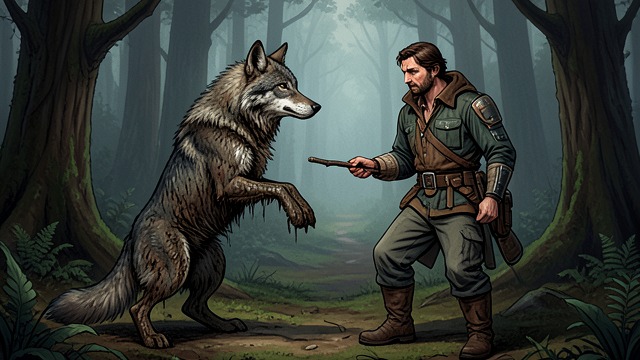
A meeting in the woods
Ursus meets Homo in a woodland setting and recognizes his intelligence.
He names the wolf Homo and brings him into a wandering life.
The name deliberately unsettles the boundary between animal and man.
Partnership on the road
Homo draws and guards the van as Ursus performs.
They share danger, hunger, and a home without fixed walls.
Their companionship is built on trust rather than mastery.
A Mutual Education
A Mutual Education
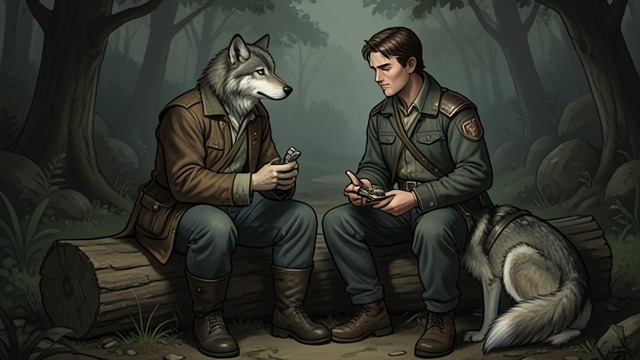
Human and animal exchange
Ursus teaches Homo restraint and performance skills.
The wolf teaches Ursus endurance, hunger, and freedom from luxury.
Each companion changes the other without erasing his nature.
A critique of civilization
Ursus regards Homo’s affection as rare and genuine.
He fears the human habit of cruelty more than the wolf’s teeth.
Their bond makes companionship possible beyond ordinary social rules.
Homo Welcomes the Children
Homo Welcomes the Children
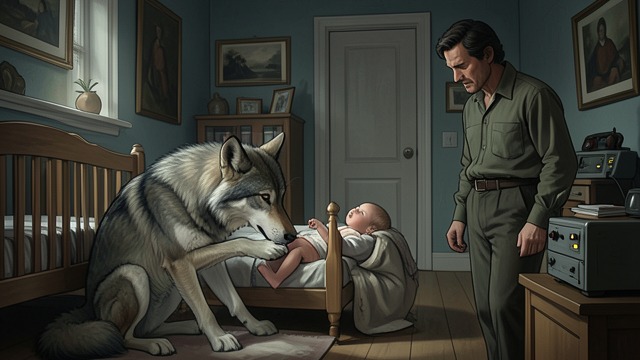
Quiet acceptance
Homo licks the sleeping infant’s hand without waking her.
Ursus recognizes the wolf’s willingness to become an uncle.
The foundlings enter a household already held together by affection.
Shared protection
Homo stays near the children as they grow.
His presence helps make the van a refuge from hostile streets.
Animal loyalty complements Ursus’s practical care.
The Wolf Threatened
The Wolf Threatened
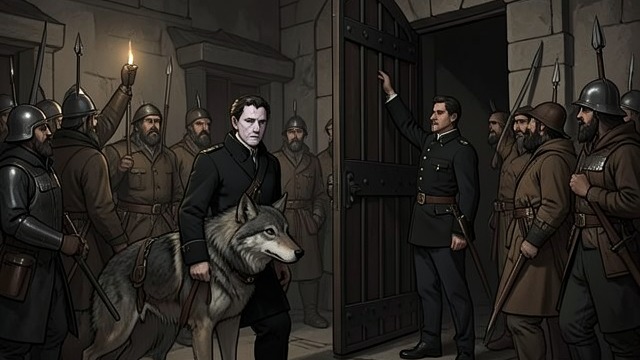
Law turns against the troupe
Religious and theatrical rivals use Homo’s outlawed status as a pretext.
Officials threaten to seize and kill him.
Ursus’s fear for his companion makes him cautious and obedient.
Loyalty under pressure
The justice orders Homo removed from England.
Ursus accepts exile rather than abandon him to execution.
Their old partnership again takes precedence over comfort and success.
The Last Guidance
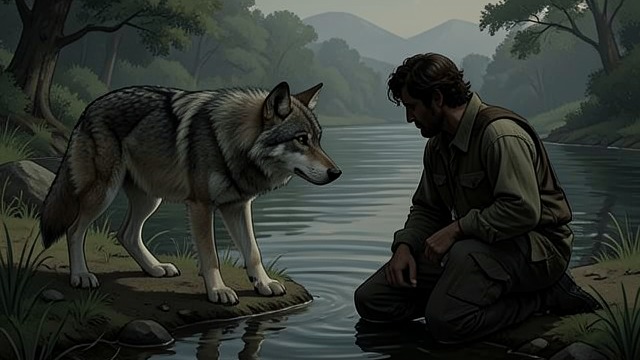
The Last Guidance
A quiet return
Homo finds Gwynplaine at the Thames before his attempted suicide.
The wolf leads him toward the ship carrying Ursus and Dea.
His instinct restores the possibility of reunion.
Loyalty after loss
After Dea dies, Homo remains at the ship’s edge with Ursus.
He bays over the place where Gwynplaine vanished into the water.
The faithful animal becomes the last witness to the broken family.
Before Ursus begins raising the children
During their years of travel before 1690
Before dawn, January 30, 1690
After the complaints against the Green Box in London
On the final night aboard the Vograat
